


Hello Hello!
It’s me again!

As far back as I can remember, I’ve always been playing something. I was one of those kids who’d be out on the field from sunrise till the sun went down. Growing up, I played every sport I could:
- Competitively: cricket, handball, kabaddi, long jump. I got to represent teams, wear the jersey, and lose important matches most of the time.
- Casually: badminton, volleyball, kho-kho, football, table tennis, chess.
And, if I tell you about people you get envious of online - most of the time that's more or less plain luck. Right parents, right city, right school, right college, right friends, right mentors, right managers, and so many things align so well for a person to succeed.
And, most of the time, I feel like I’ve just been plain lucky for most things I get, always ending up at the right place at the right time.
But I also know that a lot of who I am today is because of those early years of playing. My parents encouraged me to get out there and stay active, which kept me hooked until around age 16. Looking back now, I realize those hours on the field weren't just play—they were the foundation for the skills that I carry with me now.
If there’s one ability that sports hardwire into you, it’s this: the ability to just figure things out.
In a startup or small team setting or being self-employed, that’s one of the most valuable skills you can have. No one teaches it to you. It’s instinct and intention, built up from years of needing to make things happen. And if you didn’t develop it while working, there’s one other place you could have: in sports.
There’s a reason I believe so strongly in the impact of playing sports early in life. Let me show you what I mean with some examples:
Imagine this: you’re playing cricket, and you’ve called everyone to meet at the ground at 5 a.m. The match starts at 5:30, and at 5:20, the other team’s captain sends a photo of his whole team already on the ground, ready to go. But you’re still missing one player. He’s super important to you, but you’re staring down the possibility of starting one player short.
Now, I don’t want to compare this to some dramatic startup analogy. Just imagine an 11-year-old kid in that position. What do you think that does to his ability to handle pressure and make decisions at 22?
Compare that to someone who never played sports but nailed their grades, high school, college, and placement. I think the 11-year-old who went through these high-stakes situations will be far better at firefighting when it counts.
But that’s my take. You can disagree.
Now, picture this: you’ve just started a new sport, and you’re learning faster than most. Soon, you’re selected as captain to lead the school team. You’re on a high, thinking you’re pretty good—until you show up at an inter-school tournament. You look around and realize the kids from other schools have been playing this sport their whole lives. They’re quicker, stronger, and have a stamina you can’t match.
First game? You lose. Second game? Another loss. Last game? Whitewashed.
As the best in your school, you just got knocked out in every game. Brutal. But imagine what that does for your resilience. Is that person going to be afraid of failure, embarrassment, or losing later in life? Probably not.
Team sports, especially ones involving a ball, demand more than just athletic ability. You build this almost invisible understanding of physics—the speed, the angles, the timing of a pass. You learn when to play defensively, when to go on the attack, who to rely on, and when to sit back and let someone else take over.
This is intuition, but it’s also judgment. And at ages where you aren’t even conscious of developing these skills, they start paying off for you, year after year.
And it’s not just physics or strategy. It’s about people, trust, knowing who to lean on, and how to respond when things get tough. All these qualities that come so naturally in sports are the same ones that make a difference in business, in relationships, and in life.
I could go on, but I think you get the point.
Onto what I have been reading lately:
1/ Group chats rule the world by Sriram
This blog validates one of my core beliefs about being in the right places. As you age, this is what matters. Sure, you can get in and get opportunities by being great, but people do care about what others have to say about you. That's where being an active contributor in focused group chats really matters.
The blog was about future-defining ideas, different types of people in group chats, how groups stay alive, and more! But my mind kept going back to the point I made about "being in the right focused groups."
2/ Feynman’s Rigor by James
This is a really good perspective on details. While "I am detail-oriented" is thrown around in interviews and introductions like it's nothing, I haven't met a lot of people who are actually detail-oriented to the core, myself included (at least I don't claim to be one).
But there are unlimited upsides to being super detail-oriented. You can be confident about the things you learn and the things you shop for, and never be afraid of an expert questioning you because if you are detail-oriented, you too are an expert.
The author suggests two ways to build this muscle. One is by hacking, as the code interpreter does exactly what you say, nothing more, nothing less. If you're not detail-oriented, your code might not work.
The other way is to learn algebra. I like this approach more.
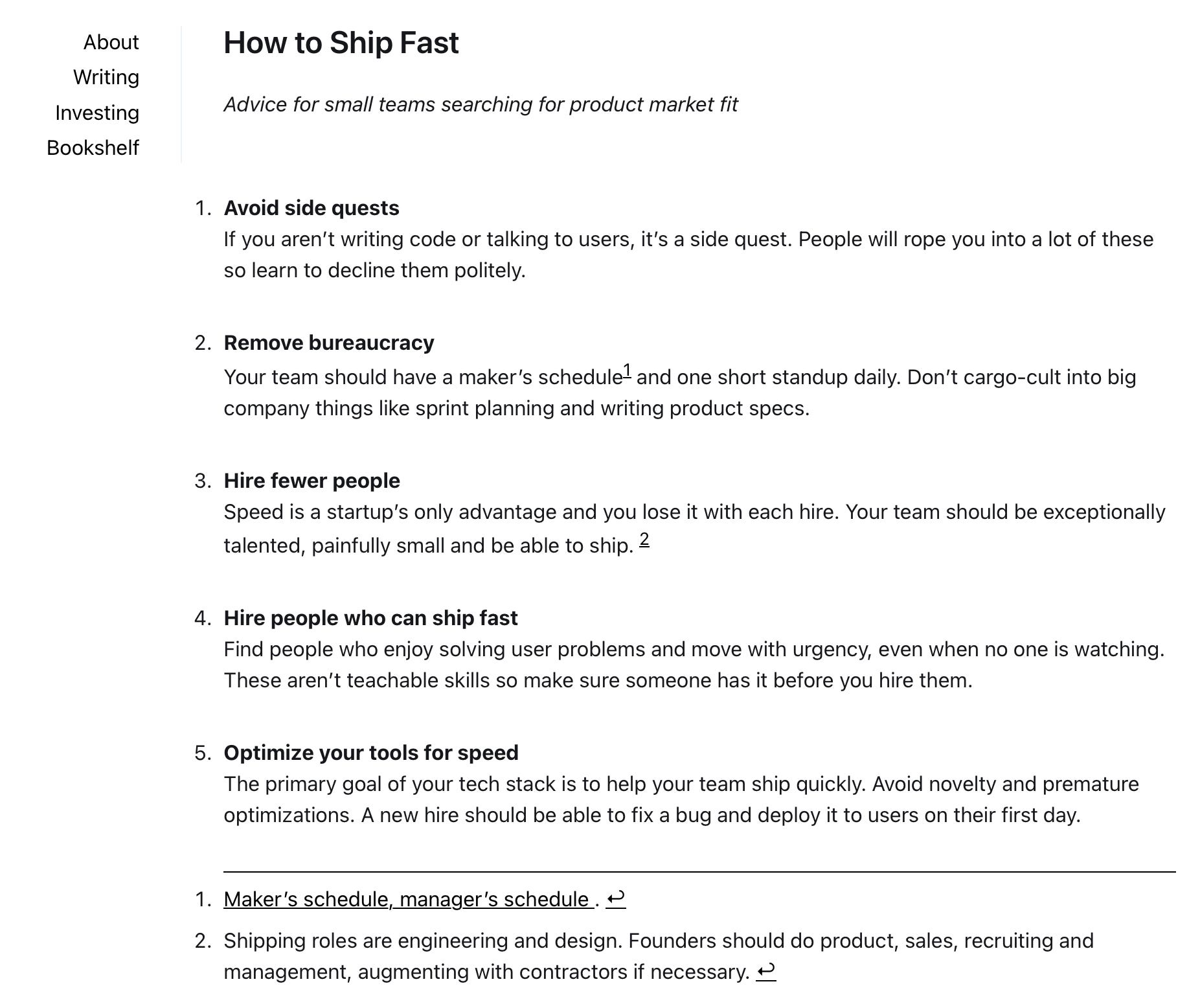
3/ How to Ship Fast by Varun
A Photo from this week:
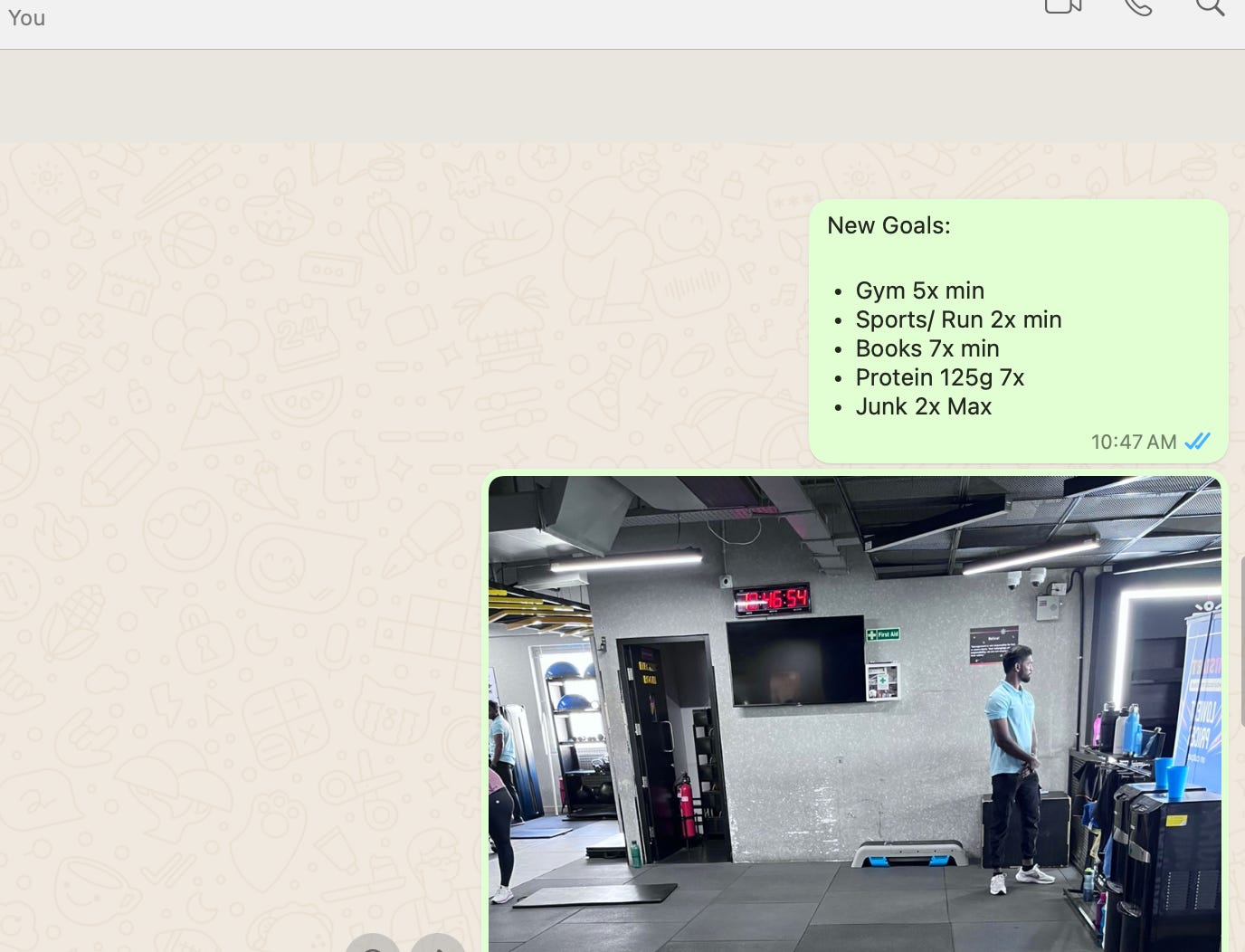
So, we have started this group called "Good Habits Accountability" that's not just about accountability but actually comes with a very heavy fine if you miss whatever goals you have set for yourself.
And I don't think I have ever been this regular with reading books in my entire life! This thing really works.
Thanks for reading, folks!
If you’d like to talk or collaborate, I’d love to meet. You can reach me at mehtatushar800@gmail.com or tushaarmehtaa on Twitter.
Here are my recent posts:
02: How I became a bit technical!
04: Being busy