

March 2025.
Hello from Himachal!

Hello, hello!
I'm wrapping up my March, and I’m (again) in a new location. This time, I’m road-tripping across Himachal with my brothers. Think Kasol, Manali, Vashisht, and many other small, unbelievably beautiful villages.

Again, I have gotten some time to think, and today, I’ve been thinking about outcomes and a concept that I call impact per unit time.
My Background
Ever since I started working, I’ve mostly been in marketing or ops. From my very first intern role (handling anything related to marketing) to my own software-building and service gigs, I’ve essentially done three things:
Hyping things up
Creating awareness about a person or project
Educating people online through different forms of media
And, of course, making sure things get done
Over time, I’ve worn many hats—core contributor (owning everything), working directly with a founder, reporting to a middle manager, and even being an intern (also owning everything :p).
Throughout these experiences, I’ve noticed that when people hire (and pay) you, it’s usually because:
They don’t know how to do something and want to hire their way through it.
They do know how, but as a founder/top exec, they have bigger goals to take care of and need someone to handle the day-to-day.
If you internalize the fact that you’re there because they either can’t or won’t do it themselves, you’ll do far better. Just put yourself in their shoes and make their life easier.
Sounds simple, but it’s surprisingly tough to pull off. Once you adopt this mindset, you’ll feel more accomplished—and they’ll be grateful to have you. Win-win.
But Founders Don’t Always Know What They Need
This happens a lot in early-stage startups—much more so than in more mature ones (where middle managers usually have a clue). Early on, founders might think they know what they need, but in reality, they’re often still figuring it out.
Once you understand that, you have to lean on your own experience and judgment to truly help them. It can feel painful at first because no one is telling you what to do. And no matter how much people claim they dislike being told what to do, figuring out what actually needs doing is far harder than simply following instructions.
But that pain is short-lived—once you push through that messy phase and establish clear roles and responsibilities, things get a lot better. Now, you’ve decided on a plan that aligns with what you enjoy doing, and the founders are happy because it delivers results. It’s a win-win.
A lot of people don’t approach work this way—and that’s not their fault. Sometimes, the person hiring you never fully shares the vision or final goals. But if you can figure it out and help them exceed those goals, you’ll do much better. Here’s what those final goals often look like:
A founder building a personal brand usually isn’t just after followers or brand deals—they want leads, traffic, and trust, which ultimately translates to sales or growth.
A company doing video marketing isn’t aiming for viral views alone; they want to simplify product adoption, build awareness, or establish authority.
It’s easy to get stuck on likes, mentions, profile visits—vanity metrics—and forget the real objective. That’s why I’m currently obsessed with impact per unit of time.
Why “Impact per Unit Time” Matters
Yes, marketing takes time. But here’s the thing:
Growing a page to 100k followers over 7 years might be straight-up pointless.
Writing 80 blogs without ever tracking performance is a big no-no.
Getting 1 million impressions in a year might not cut it if your competitors are doing that every month.
Consider two marketers who both grew a brand to 250k followers:
Piyush did it in 6 months
Vaibhav took 2 years
When they apply for their next job, they’ll both talk about the same end result, but Piyush’s case looks way more impressive. That’s the power of efficiency—achieving a lot and doing it fast.
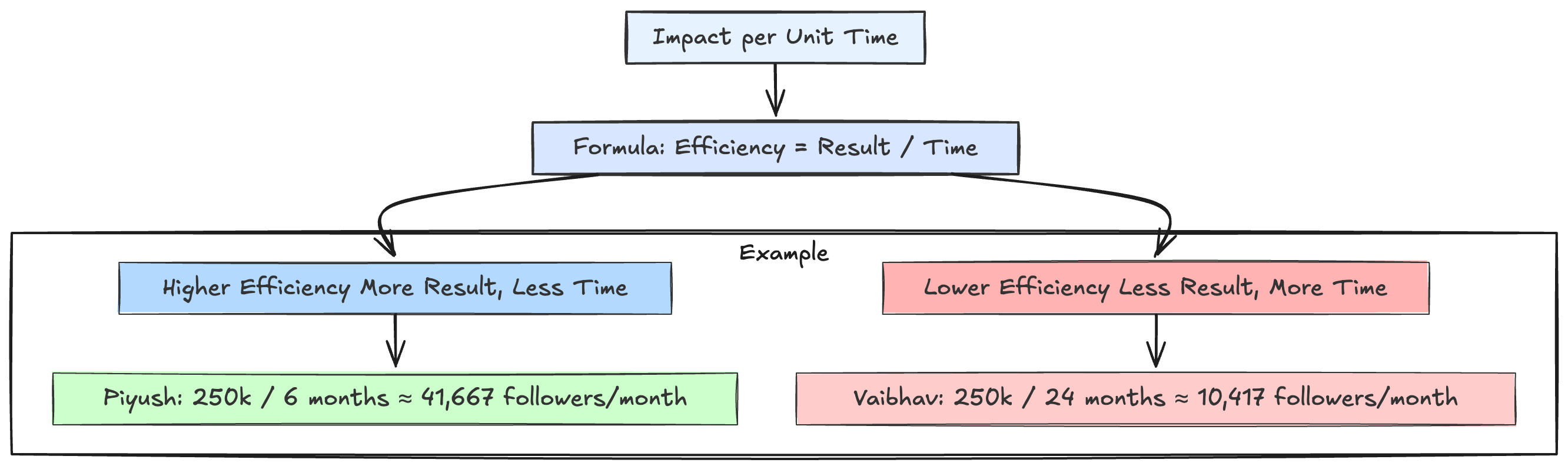
If you measure your own results against the actual time you spent and the ratio is low, you’ll feel embarrassed. And while your current boss or client might be patient, it can hurt your career if you never track achievements—just because the founder “didn’t mind” doesn’t mean you shouldn’t care.
Time is your biggest currency when you’re young and still figuring out a career that’s meaningful, pays well, and keeps you motivated.
This entire thing came up because I was talking to a friend about her performance and realized she had “something,” but basically a whole lot of nothing.
That’s when I nailed down my stance: If you’re not hitting the right metrics—or any metric that truly matters—maybe it’s time to find work where you can produce meaningful results.
Because if you’re not growing, you’re just water in a pond—and that water isn’t going anywhere.
Recent Reads
This is such a deep rabbit hole—especially if you're curious about the major factors behind big questions like "Is this really India’s decade?", "What’s driving the momentum?" and "What’s still holding us back?"
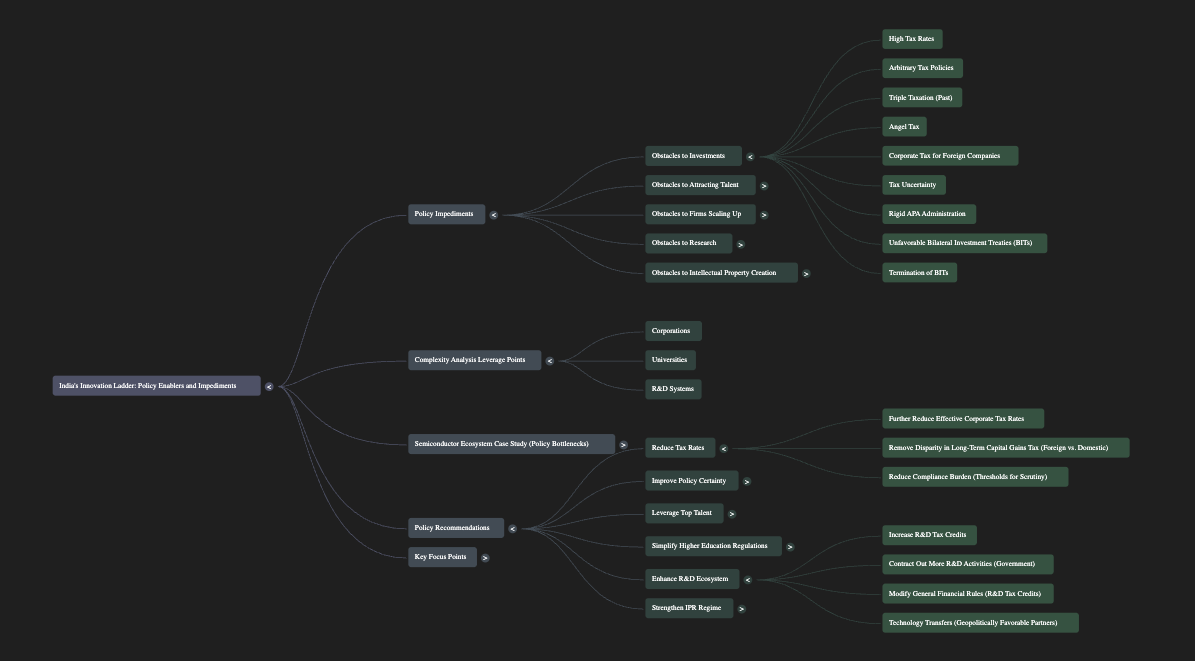
This is one of those topics I just can’t stop obsessing over: What do I truly want? What are my desires, how am I spending my money, what are my actual needs, and where do I even want to live? Does any of this make sense?
And every time I sit with these thoughts, I feel a little dumber about some of my past decisions—but maybe that’s good. It clears the way for whatever’s next.
This is the start of another deep dive for me—something I need for work (and maybe personal reasons, too). I think I am really interested in health (reducing human suffering) and education (increasing human potential), and for health, this might be the beginning. I'll share more details later, but for now, here’s a great read on weight loss and how so many big shots are getting jawlines.
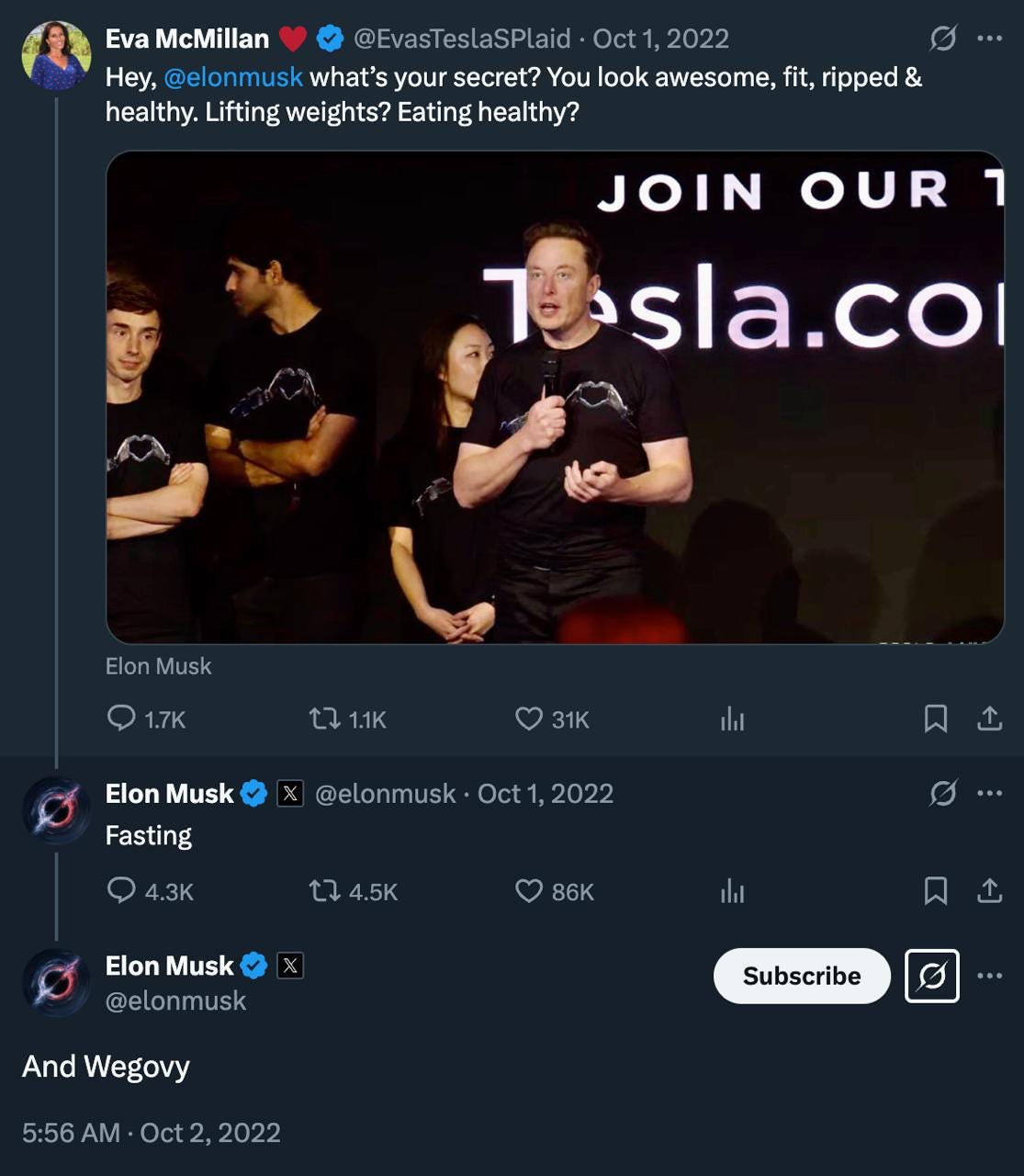
One of those articles where you keep thinking, “This could be a whole separate post” or “He absolutely nailed it here!”
Every section feels so rich, it’s easily one of the highest-value-per-word pieces I’ve read this year.
That’s it for now!
I’ll catch you again next month with fresh thoughts on what I’m up to, where I am, and everything in between.
In the meantime, feel free to check out my previous posts:

